

Neurological Risks and Political High Stakes: The Medical Crisis of Jharkhand Student Leader Jairam Mahto

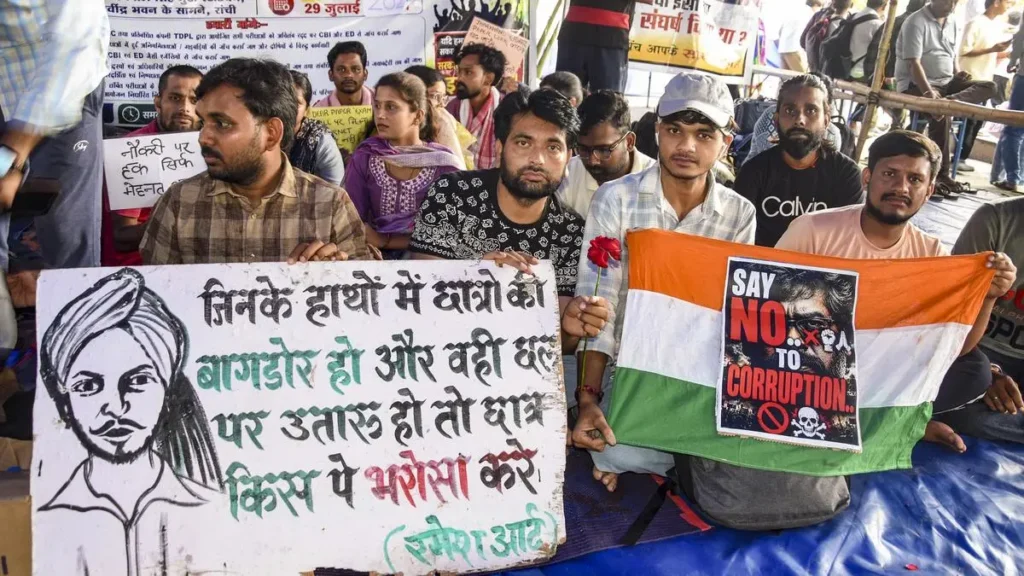
Medical specialists in Ranchi, Jharkhand, issued a critical health alert on Friday, warning that prominent youth leader and Jharkhand Loktantrik Krantikari Morcha president Jairam Mahto faces an imminent risk of neurological seizures. The clinical assessment follows weeks of relentless political campaigning, irregular dietary intake, and severe physical exhaustion that have collectively compromised Mahto’s metabolic stability. This medical emergency has sent shockwaves through Jharkhand’s political landscape, where Mahto has emerged as a powerful force mobilizing the state’s youth ahead of the upcoming assembly elections.
Immediate Medical Intervention and Neurological Risks
A specialized team of doctors conducting the clinical evaluation reported that Mahto is suffering from acute sleep deprivation, severe dehydration, and critical electrolyte imbalances. Clinical diagnostics indicate that his sodium and potassium levels have plummeted to thresholds that can trigger sudden electrical disturbances in the brain. Medical practitioners have advised immediate hospitalization, continuous intravenous fluid resuscitation, and absolute physical rest to prevent irreversible neurological damage.
The medical team emphasized that prolonged physical exertion without adequate recovery has pushed Mahto’s body into a state of extreme catabolic stress. Under these conditions, the brain becomes highly susceptible to hyperexcitability, which significantly lowers the seizure threshold. Despite these stark warnings, Mahto’s close aides report that the leader remains reluctant to pause his public engagements, citing commitments to his ongoing political movement.
The state administration has placed local medical facilities on high alert, preparing for a scenario where emergency intervention may become mandatory. The prospect of forcibly hospitalizing a high-profile political figure remains a sensitive issue, as it risks triggering widespread protests among his volatile youth support base. Consequently, doctors are monitoring his vital parameters remotely while advising his core committee to facilitate immediate voluntary admission to a tertiary care hospital.
The Catalyst: Jairam Mahto and the JBKSS Movement
To understand the gravity of the current situation, one must examine the meteoric rise of Jairam Mahto, popularly known as ‘Tiger Mahto’ among his followers. Over the past three years, Mahto has transformed from a student activist into a formidable political disruptor, challenging the established hegemony of traditional parties like the Jharkhand Mukti Morcha and the Bharatiya Janata Party. His platform, originally organized under the banner of the Jharkhand Bhasha Khatiyan Sangharsh Samiti, taps into deep-seated regional grievances regarding land rights, employment, and linguistic identity.
Mahto’s political narrative centers on the protection of ‘Khatiyani’ rights, which refers to the historical land records of 1932. He argues that only those whose ancestors are registered in these pre-independence land records should be considered legitimate residents of Jharkhand, thereby securing exclusive rights to state government jobs and welfare schemes. This rhetoric has resonated deeply with millions of unemployed youth who feel marginalized by influxes of non-local workers in the state’s industrial and mining sectors.
His campaign style is characterized by grueling, round-the-clock roadshows, public rallies, and hunger strikes, which have taken a severe toll on his physical health. Observers note that Mahto’s refusal to pace his campaigns stems from a perceived urgency to capitalize on the current wave of youth anger before the state goes to the polls. This relentless drive has ultimately culminated in the current medical crisis, highlighting the physical cost of grassroots political mobilization in India’s tribal heartland.
Understanding the 1932 Khatiyan Controversy
The 1932 Khatiyan issue is not merely a political slogan; it is a deeply divisive constitutional and socio-economic debate that has shaped Jharkhand’s history since its creation in 2000. Proponents of the 1932 benchmark argue that it is the only viable method to safeguard the cultural and economic interests of the indigenous tribal and ‘Moolvasi’ populations. They contend that subsequent land surveys are incomplete and favor outsiders who migrated to the state during its rapid industrialization.
Opponents, however, warn that using 1932 land records as the sole yardstick for citizenship and employment benefits is legally untenable and socially exclusionary. Large sections of the population, particularly in urban centers like Jamshedpur, Ranchi, and Dhanbad, migrated to Jharkhand post-1932 and have lived there for generations. Legal experts have repeatedly pointed out that such a policy violates constitutional guarantees of equality and the right to reside and work anywhere within the territory of India.
The Jharkhand Assembly has previously passed bills asserting the 1932 Khatiyan as the basis for local identity, only to face legal hurdles and rejection from the gubernatorial office. This legal stalemate has fueled public frustration, which Mahto has successfully channeled into a populist movement. By framing the issue as a battle for survival for the youth of Jharkhand, Mahto has created a dedicated voter base that views his health crisis as a sacrifice for the collective future of the state.
The Physiological Toll of Prolonged Political Agitation
The medical crisis confronting Jairam Mahto highlights a broader, often ignored aspect of political activism: the severe physiological toll of prolonged public fasting and high-stress campaigning. Medical literature documents that extended periods of physical stress, coupled with irregular nutrition, can trigger systemic organ dysfunction. When an individual engages in continuous travel and public speaking under harsh weather conditions, the body’s endocrine system releases high levels of cortisol and adrenaline.
These stress hormones, while providing temporary energy, eventually deplete glycogen stores and lead to severe muscle wasting and metabolic acidosis. In Mahto’s case, the suspected risk of seizures is directly linked to this metabolic exhaustion, which disrupts the delicate sodium-potassium pump mechanism within brain cells. Without prompt intervention, this cellular imbalance can cause cerebral edema, leading to confusion, seizures, or even comatose states.
Historically, political fasts in India have led to severe long-term health complications for activists, with some suffering permanent renal or cardiac damage. Medical experts argue that the romanticization of self-deprivation in political struggles often pressures young leaders to ignore early warning signs of physical collapse. For Mahto, whose political career is in its infancy, the current health crisis represents a critical juncture where physical survival must be balanced against political momentum.
State Administration and the Law Enforcement Dilemma
The deteriorating health of the student leader presents a complex administrative and law enforcement challenge for the Jharkhand government. Mahto is currently facing multiple legal cases related to unlawful assembly, blocking public roads, and inciting protests during his agitations. Law enforcement agencies find themselves in a precarious position, as any aggressive legal action against Mahto during his current health crisis could provoke widespread civil unrest.
Intelligence reports suggest that youth groups across several districts are prepared to launch spontaneous protests if Mahto’s condition deteriorates further or if he is arrested under controversial circumstances. Consequently, the state government has adopted a cautious approach, balancing the enforcement of legal mandates with the necessity of maintaining public order. Local administrations have beefed up security around major hospitals in Ranchi and Dhanbad to prevent any untoward incidents.
The ruling coalition, led by the Jharkhand Mukti Morcha, is acutely aware that Mahto’s supporters view any state action against him as political vendetta. If the administration forces medical treatment upon him, it risks being accused of authoritarianism; if it fails to act and his health worsens, it will face accusations of negligence. This delicate political calculation has slowed down administrative decision-making, even as medical professionals urge immediate action.
Socio-Economic Realities of Jharkhand’s Youth Demographics
To fully comprehend the intensity of the support surrounding Jairam Mahto, one must analyze the socio-economic indicators of Jharkhand. Despite being exceptionally rich in mineral resources, containing nearly 40 percent of India’s mineral wealth, the state suffers from chronic underdevelopment and high poverty rates. The lack of diversified industrial growth has left the state heavily reliant on mining and agriculture, neither of which has generated sufficient high-quality employment for the rapidly growing youth population.
According to recent labor force surveys, unemployment among educated youth in Jharkhand remains significantly higher than the national average. Government recruitment drives are frequently marred by paper leaks, litigation, and administrative delays, leaving millions of aspirants in a state of perpetual uncertainty. This systemic failure has created a deep sense of disillusionment among the youth, who feel that the state’s wealth is being extracted while they are left without viable livelihoods.
Mahto’s movement has successfully capitalized on this economic despair by linking the lack of jobs directly to the absence of a strict domicile policy. By promising that a Khatiyan-based policy would instantly secure thousands of government jobs for local youth, he has offered a tangible, albeit simplistic, solution to a complex structural problem. For his followers, Mahto is not just a politician; he is the voice of a discarded generation fighting for economic dignity.
Comparative Regionalism: Echoes of the Statehood Struggle
The current political mobilization led by Mahto draws striking parallels to the historic Jharkhand statehood movement of the late 20th century. That movement, led by legendary figures like Shibu Soren and Binod Bihari Mahato, was also built on the foundation of regional identity, tribal rights, and resistance against perceived exploitation by outsiders. The slogan of ‘Jharkhand for Jharkhandis’ that defined the statehood struggle has been effectively resurrected by Mahto’s platform.
However, analysts point out a crucial difference between the historical movement and the contemporary one. While the original struggle was primarily focused on achieving administrative autonomy from Bihar, Mahto’s movement is directed inward, targeting the perceived failures of the post-statehood ruling class. He accuses successive state governments of betraying the ideals of the statehood martyrs by failing to implement policies that benefit the indigenous population.
This internal critique has allowed Mahto to bypass traditional political alignments and appeal directly to a pan-Jharkhandi identity that transcends caste and tribal divisions in certain regions. By framing the current struggle as the ‘second war of independence’ for Jharkhand, Mahto has elevated his political standing, making his personal health and survival a matter of immense symbolic importance for his followers.
The Media War and Grassroots Mobilization
A defining characteristic of Jairam Mahto’s political rise has been his highly effective utilization of digital media and grassroots networking. Unlike traditional political parties that rely on massive financial resources and established party machinery, Mahto’s campaign has been largely self-funded and driven by decentralized volunteer networks. Social media platforms, particularly YouTube, Facebook, and WhatsApp, have served as his primary channels for broadcasting speeches and organizing protests.
This digital strategy has allowed Mahto to bypass mainstream media outlets, which initially ignored his movement. His speeches, delivered in local dialects like Khortha and Kurmali, are tailored to resonate with rural audiences, creating an intimate connection that traditional politicians struggle to replicate. The digital space is currently flooded with updates on his health, with supporters sharing videos of his speeches alongside prayers for his recovery, further amplifying his martyr-like status.
However, this intense digital mobilization also presents risks, as misinformation regarding his health status can spread rapidly, potentially triggering panic or spontaneous protests. The state’s cyber security wing is actively monitoring social media platforms to curb the spread of inflammatory content or false rumors regarding Mahto’s medical condition. The situation highlights how digital media can accelerate political polarization and mobilize masses within hours during a public health or political crisis.
Strategic Implications for the Upcoming Assembly Elections
The medical condition of Jairam Mahto has direct and profound implications for the upcoming Jharkhand Assembly elections. Political analysts suggest that Mahto’s party, the JLKM, has the potential to act as a major spoiler for both the ruling JMM-led alliance and the opposition BJP. By contesting seats in the coal belt and the Ranchi-Hazaribagh plateau, Mahto’s party could split the regional and youth votes, making electoral outcomes highly unpredictable.
If Mahto is incapacitated due to his health, his party may struggle to maintain its momentum, as it is heavily reliant on his personal charisma and oratorical skills. Conversely, if he recovers and returns to the campaign trail, the sympathy wave generated by his health crisis could significantly boost his party’s electoral prospects. Traditional parties are closely watching his medical updates, adjusting their campaign strategies to counter the potential political fallout of his condition.
The JMM, which has historically positioned itself as the sole champion of tribal and regional interests, faces the toughest challenge from Mahto’s rise. If Mahto successfully convinces voters that the JMM has failed to deliver on its promises regarding the 1932 Khatiyan, it could lead to a significant shift in the state’s political dynamics. The BJP, on the other hand, hopes to benefit from a split in the regionalist vote, though Mahto’s appeal among non-tribal backward classes also threatens its traditional support base.
Future Trajectories and Variables to Monitor
As the state of Jharkhand edges closer to its assembly elections, several critical variables must be monitored to understand how this medical and political crisis will unfold. First and foremost is the immediate clinical recovery of Jairam Mahto; his willingness to accept medical advice and temporarily halt his demanding campaign schedule will dictate his physical capacity to lead his party through a grueling election cycle. Any prolonged hospitalization will test the resilience of his decentralized party structure, revealing whether the movement can survive without its primary figurehead.
Secondly, the reaction of the state administration and law enforcement agencies will be crucial. Observers must watch whether the government chooses to enforce pending legal warrants against Mahto or if it prioritizes political stability by allowing him a pathway to recover without legal interference. The handling of his medical situation by state-run healthcare institutions will also be scrutinized for any signs of political bias or administrative lapses.
Finally, the shifting sentiment of Jharkhand’s youth voters in the wake of Mahto’s health crisis remains a key factor. Whether this moment of physical vulnerability solidifies his image as a selfless champion of regional rights or exposes the limitations of a movement centered entirely on a single individual will become clear in the coming weeks. The intersection of public health, regional identity, and electoral politics in Jharkhand has created a highly volatile environment where a single medical update could alter the state’s political trajectory for years to come.
